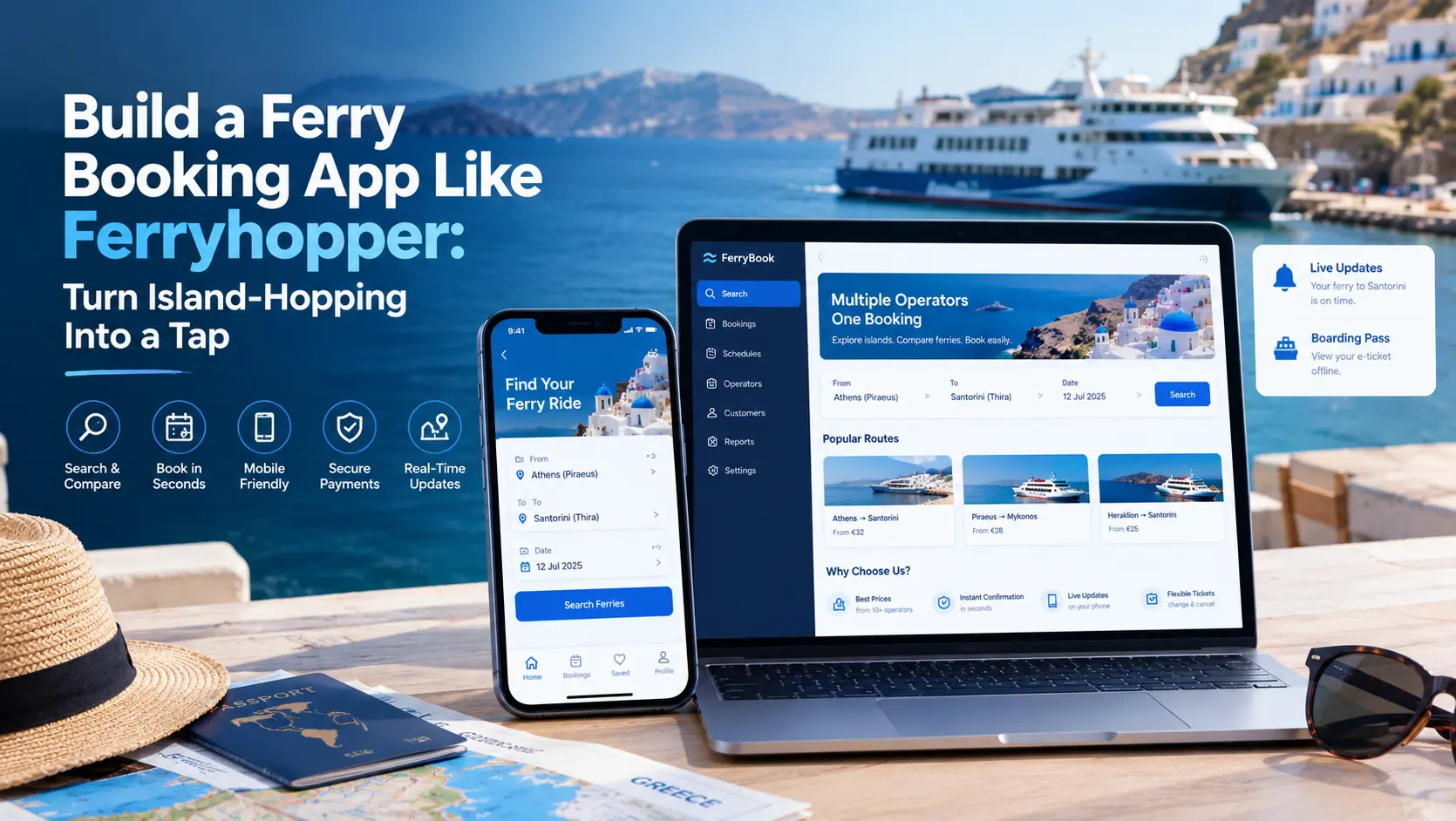
Build a Ferry Booking App Like Ferryhopper: What It Takes to Turn Island-Hopping Into a Tap
Picture this. You're standing on a sun-baked pier, phone at 12% battery; trying to work out whether the 4:30 PM ferry connects to the island you actually want. Three operator websites are open in three tabs. One is in a different language. One won't accept your card.
Now picture the same moment with a single app: search, compare, book, done. The ticket is in your pocket before your coffee cools.
That gap between chaos and one tap is the business opportunity behind ferry booking platforms like Ferryhopper. If you run a ferry operator, a travel agency, or a tourism startup, it may be the biggest opening in your market.
Here's why these platforms work, what makes them sticky, and how you can build one.
Why Ferry Booking Is Ready for a Digital Overhaul
Ferry travel is still one of the most fragmented corners of the travel industry. Timetables change by season. Routes are split across dozens of operators. Ports are hard to navigate, and many travelers are booking in a language that isn't their own.
Platforms like Ferryhopper solved this by acting as a single search-and-booking layer across many operators. Travelers don't need to know who runs which route. They enter where they are and where they want to go, and the platform works out the rest, including multi-leg itineraries that would take hours to piece together manually.
For travelers, that means less stress. For businesses, it means:
- Higher conversion, because search and payment happen in one place
- Repeat bookings, because a trusted app becomes the default choice
- Richer data on demand, routes, and seasonal trends
- New revenue streams from partnerships, upsells, and commissions
What Travelers Actually Want (and Where Most Platforms Fall Short)
Ask any frequent traveler what frustrates them, and the answers are surprisingly consistent:
- "I can't tell if my connection works." They need smart multi-leg route planning, not a list of disconnected departures.
- "The site is slow on my phone." Most ferry bookings happen on mobile, often on patchy port Wi-Fi.
- "I don't trust the checkout." Unclear fees and clunky payment flows kill conversions fast.
- "What if my ferry is cancelled?" Travelers want live updates and easy rebooking.
- "Where's my ticket?" Digital tickets that work offline are no longer a bonus. They're expected.
If your platform answers these five worries, you're ahead of most of the market.
The Features That Drive Bookings (and Human Connection)
A booking platform shouldn't feel like a database. The best ones feel like a helpful local friend. Here's what creates that feeling.
- Search that thinks like a traveler. Flexible dates, nearby ports, and "cheapest day to travel" suggestions turn a search into a discovery moment. People book when they feel guided, not when they feel processed.
- Multi-operator, multi-leg routing. This is the heart of the Ferryhopper-style model. Connect several operators' schedules into one itinerary, and you remove the biggest barrier to booking.
- A mobile-first experience. Fast load times, thumb-friendly buttons, saved passenger details, and Apple Pay or Google Pay support can noticeably reduce drop-off at checkout.
- Real-time notifications. Delay alerts, gate changes, and boarding reminders build trust. Travelers remember the app that warned them before the problem hit.
- Offline-ready e-tickets. No signal at the port? No problem. This one feature earns loyalty.
- Human touches. Live chat, multilingual support, traveler reviews, and destination tips turn a transaction into a relationship. Personal, helpful microcopy ("Great choice! Your island awaits") makes the whole experience warmer.
- Smart personalization. Remember past trips, suggest return journeys, and offer timely deals. When the app feels like it knows you, you stop being one option among many.
Web or Mobile App? The Answer Is Usually Both
Web platforms are excellent for discovery. Travelers Google their route, land on your site, and start comparing. That makes SEO-friendly route pages a powerful way to attract organic traffic.
Mobile apps are where loyalty lives. Push notifications, saved tickets, and one-tap rebooking keep users coming back.
The strongest strategy connects the two: a fast, search-optimized website that funnels travelers into a polished app experience. Both should share one backend so pricing, availability, and user accounts stay in sync.
Technical Foundations Worth Getting Right
You don't need to be a developer to plan well, but a few foundations decide whether your platform scales:
- API integrations with ferry operators and payment gateways
- A flexible booking engine that handles seasonal schedules, promotions, and multi-passenger, multi-vehicle bookings
- Scalable cloud infrastructure for summer peaks, when traffic can surge overnight
- Security and compliance, including secure payments and data privacy
- Analytics that show where travelers drop off, so you can keep improving
Skipping these early usually means expensive rebuilds later.
Common Mistakes to Avoid
- Launching with too many features. Start with search, booking, and e-tickets. Grow from there.
- Ignoring mobile performance. If it's slow on a weak connection, it's broken.
- Treating design as decoration. Clear, calm design is what makes people feel safe entering card details.
- Skipping user testing. Real travelers will find friction your team never notices.
Frequently Asked Questions (FAQs)
Cost depends on features, the number of operator integrations, and platforms (web, iOS, Android). A focused MVP with search, booking, payments, and e-tickets costs far less than a full multi-operator platform with real-time updates and personalization. A free consultation with Crayola Digital gives you an estimate based on your specific scope.
An MVP typically takes a few months, while a full platform with several operator integrations takes longer. Timelines depend on how many APIs need to be connected and how complex your booking rules are.
Usually yes. A website attracts travelers through search, and a mobile app keeps them loyal through push notifications and saved tickets. Both should share one backend.
Yes. A multi-operator booking engine pulls schedules and availability from various operators through APIs and presents them as one searchable, bookable itinerary.
Start with smart search, multi-leg routing, secure checkout, and offline-ready e-tickets. Add notifications, personalization, and loyalty features as you grow.
Ready to Build Your Own Ferry Booking Platform?
Ferry travel is booming, and travellers are actively looking for simpler ways to book. The businesses that give them a fast, friendly, trustworthy experience will win their loyalty.
At Crayola Digital, we design and build web and mobile apps that turn complex journeys into effortless ones, from the first search to the final ticket scan.
Have a booking platform idea? Let's talk. Book a free consultation and we'll map out your features, timeline, and budget, with no obligation.
Also explore our related Industry:
Contents
Need help building your app?
Book a free consultation with Crayola Digital and get a custom fleet tracking roadmap.